GeoJourney Episode 11
Stage 4 Begins: Interior Skins, the Staircase, and Engineering the Home as a Product
Author:
Welcome back to GeoJourney Episode 11. Last episode, the interior walls were framed and the full MEP system came together behind the scenes. Now, Amma One officially enters Stage 4: finishes.
What You'll See in this Episode:
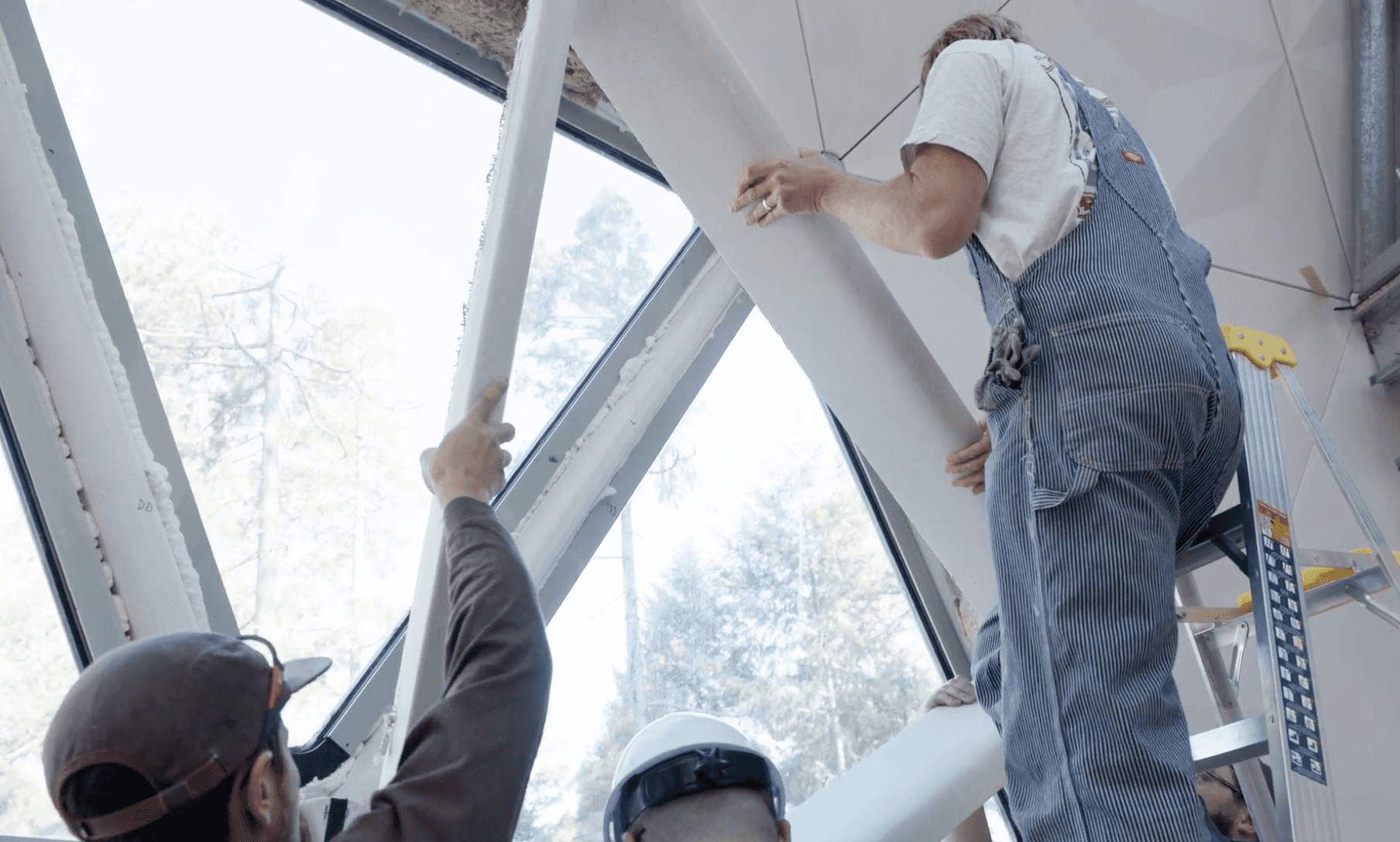
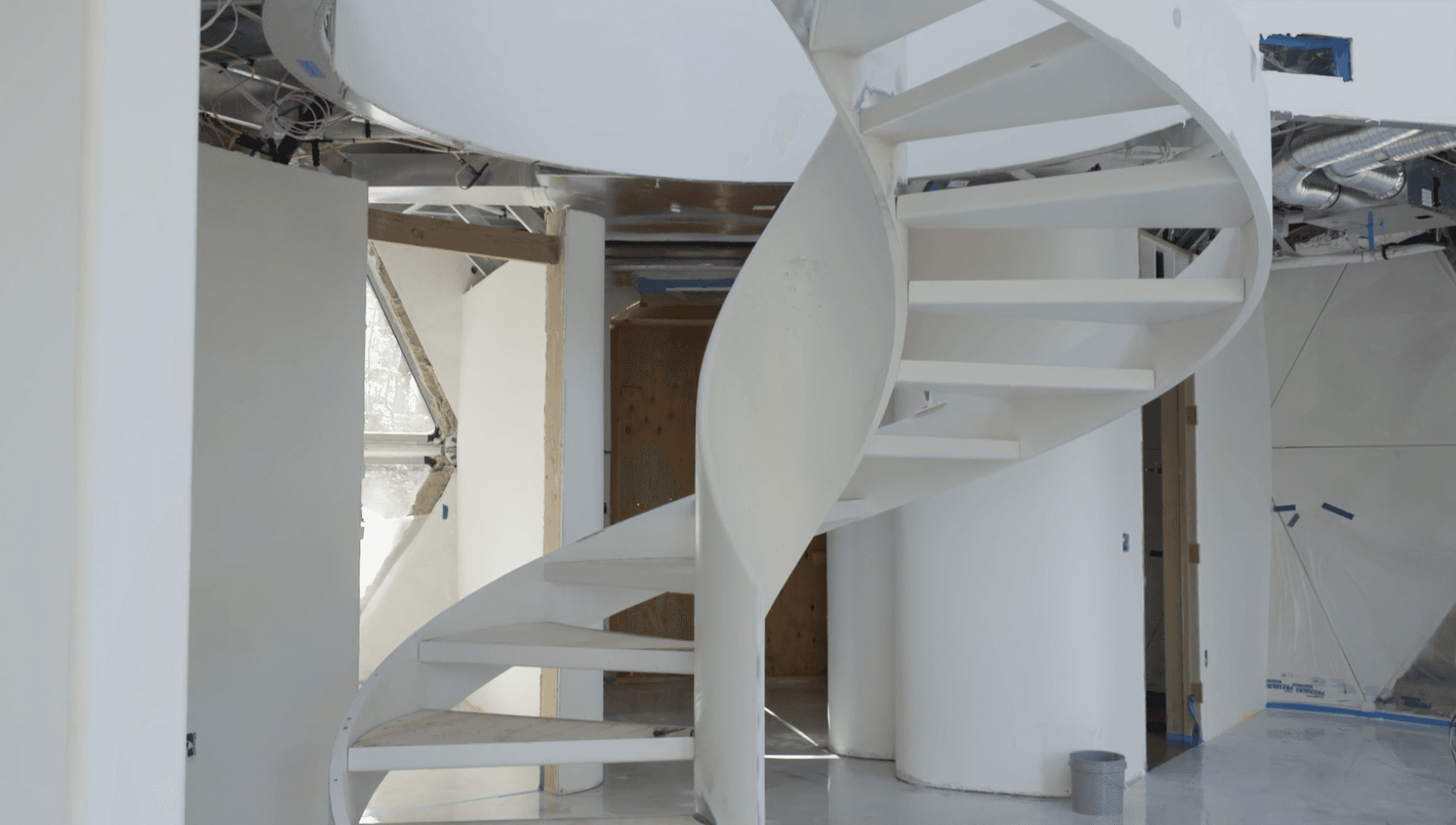
Interior Finishes Begin: Neil Decker and the install team install the interior bioceramic skins, set the factory-made window sills, and complete the three-part circular staircase, the first finishes that make Amma One feel like a real home.
Engineering the Home as a Product: A behind-the-scenes look at how Geoship's automotive and consumer-tech roots shape a testing-and-validation approach built for scale.
Stage 4: Interior Finishes
It's official. Stage 4 has begun. Stage 4 is all the finishes, the things that make this dome look beautiful. The first item on the list: interior skins.
Interior Skins
The interior skins share the same bioceramic material as the exterior skins, but with less sand and air worked into the mix. They're also faceted. That faceting serves two purposes: it's a distinctive design detail, and it helps break up the echo that can otherwise build up inside a dome.

Window Sills
Alongside the interior skins, the team is installing the interior window sills. Like so much of Amma One, the sills are made in the factory and brought to site ready to install. On site, the team uses a CAD program to define each sill's precise location before it's set in place.
The Staircase
The circular staircase connecting Amma One's two floors is finally in. Every panel, sill, and step on that staircase was refined and tested before it ever reached the site, a small detail that says a lot about how Geoship builds.
Engineering the Home as a Product
That level of care isn't incidental. It's the product of treating a home as an engineered product, rather than a one-off construction project.
Most of Geoship's team comes from the automotive and consumer-tech industries, backgrounds built around producing thousands of identical, reliable units rather than one-off builds. That experience changes how a home gets approached. Look at a house through the lens of a product, built by engineers, and it stops being a thing you build and becomes a system, like a car or a phone. Every component and every part gets considered in how it interacts with every other part.
The V Diagram
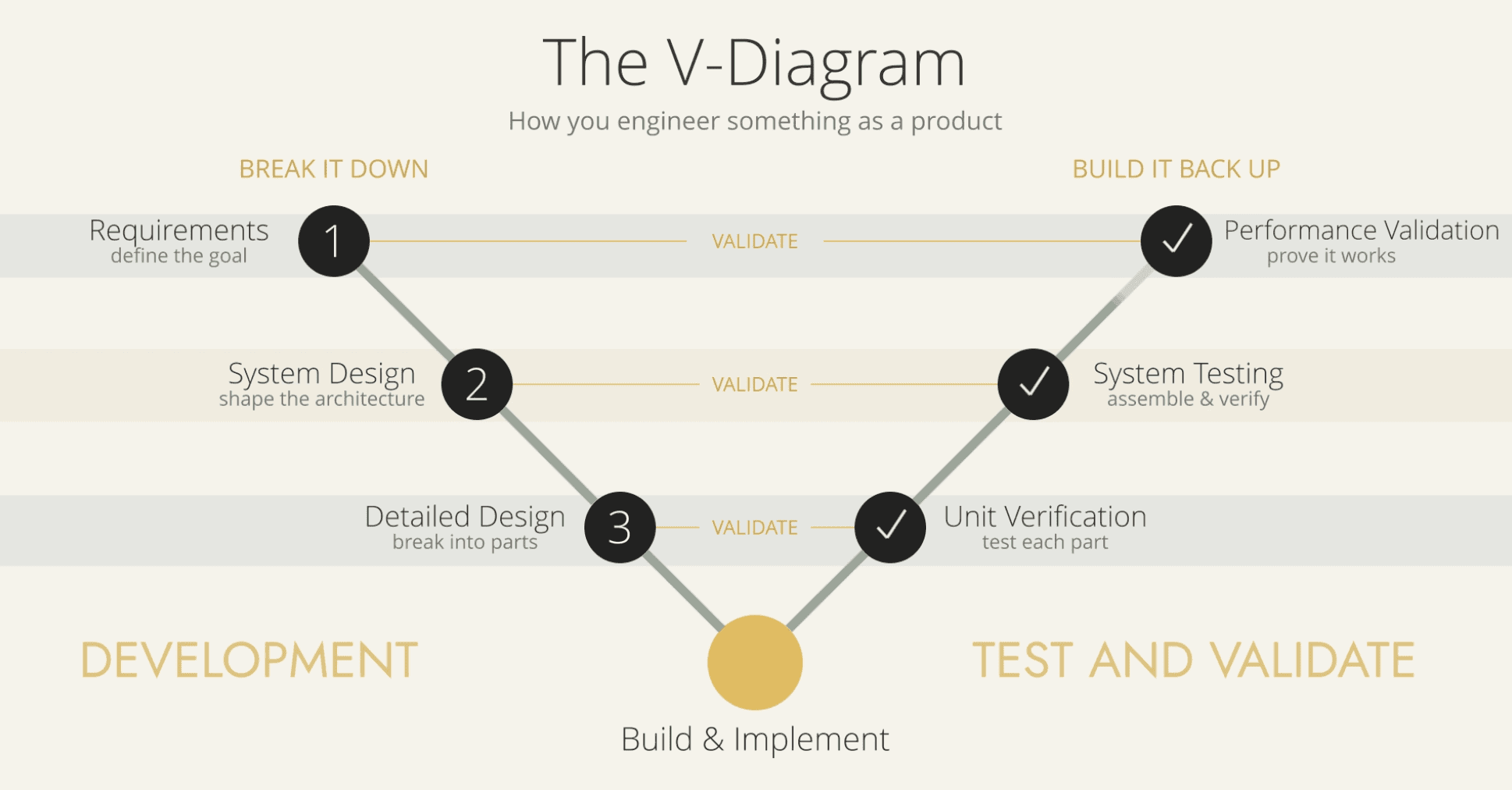
Engineering something as a product follows a shape engineers draw on the whiteboard: the V. You work down one side of the V, breaking a problem into smaller and smaller pieces. Then you work back up the other side, putting it all back together and validating as you go. No step moves forward until it clears review.
Test, Test, Test
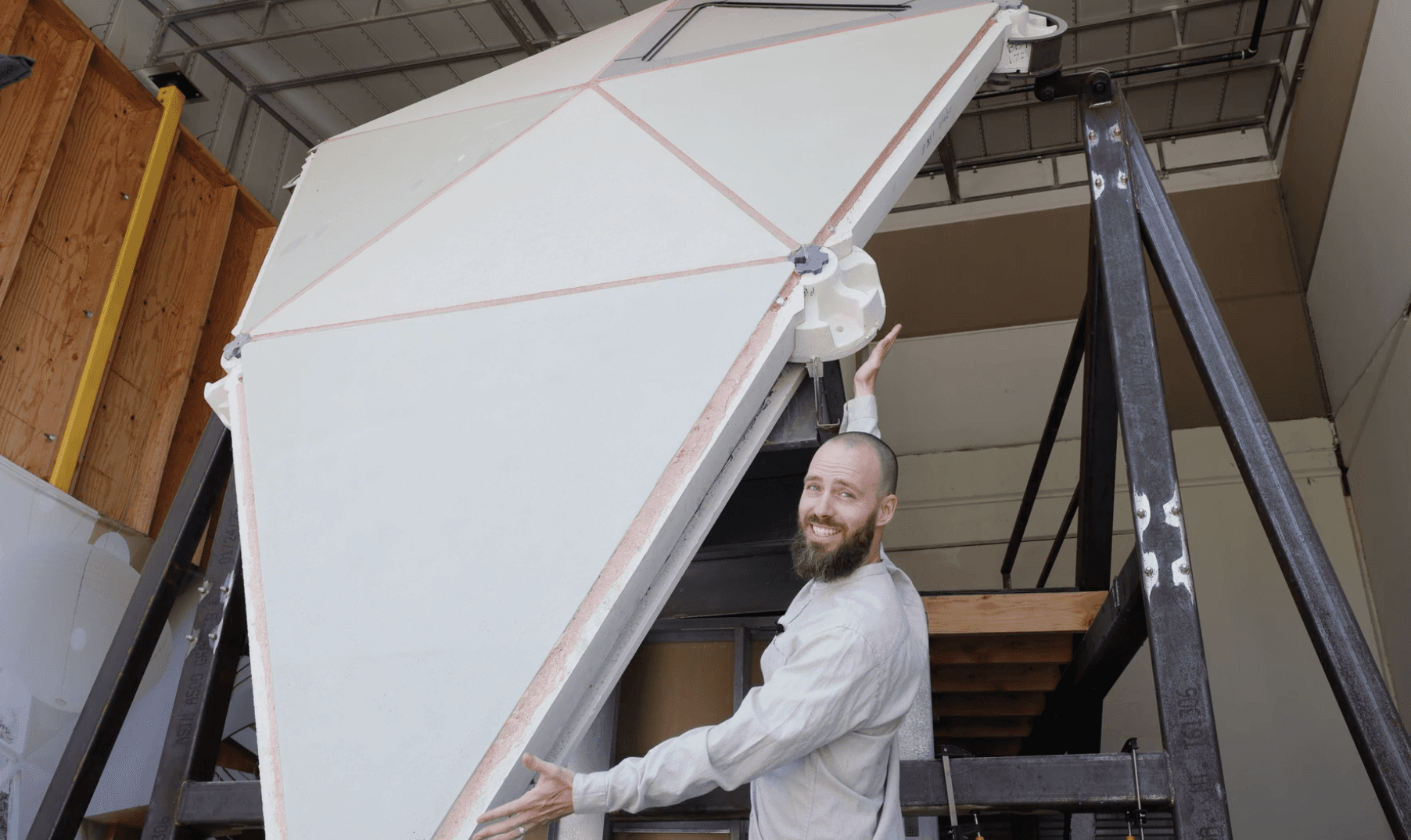
Prototype testing is what makes that validation real. The Slice is one such prototype: a section built at 1/14th the size of the Amma founder edition dome. It's something the team can put their hands on, see, and feel, and it's how they catch what isn't working before it's expensive to fix.
"At Tesla we built 100 Model 3s at a pilot facility called Cato way before the main line ever turned on." - Andrew James
The point of that work is the same point behind the Slice: find what's wrong while it's still cheap to fix. Building, touching, fixing, learning, that's where Amma One is right now, so that when the production line turns on, it turns on right.
Assembly, Not Construction
Houses today are largely built the way they always have been: one at a time, by craftspeople, with raw materials delivered to the site and cut to fit. In automotive manufacturing, parts arrive at the assembly line ready to go, with no cutting or measuring required. Geoship is bringing that same process to home building, assembling on site rather than constructing on site. For the customer, that shift means better product quality and lower cost.
It's the Machine That Builds the Machine
In car manufacturing, the vehicle and the production line that builds it are designed together. Geoship is applying the same principle to homes. Every dome the team builds feeds lessons back into the factory that builds the next one, and the next one after that. The factory teaches the team how to make better homes, and each iteration gets better because of the machine built to build it.
A quality product at a price people can afford doesn't happen on a dirt lot, one house at a time. It happens when a home is treated as a product: engineered, validated, and manufactured, built repeatably at scale. Nearly everything else in daily life goes through that process, designed, tested, refined, and built again and again, except the house people live in. Geoship is building the engineering to change that expectation.
What's Next
The interior skins are going up, the staircase is in, and Amma One is starting to look like a place someone could actually live. In the next episode, we'll continue following the finish work as the dome gets closer to move-in ready.
Thank you for following this journey and believing that housing can be built differently. Whether you're an investor, a future homeowner, or someone who shares the vision of regenerative living, you're part of making this transformation possible.
The Geoship Crew